


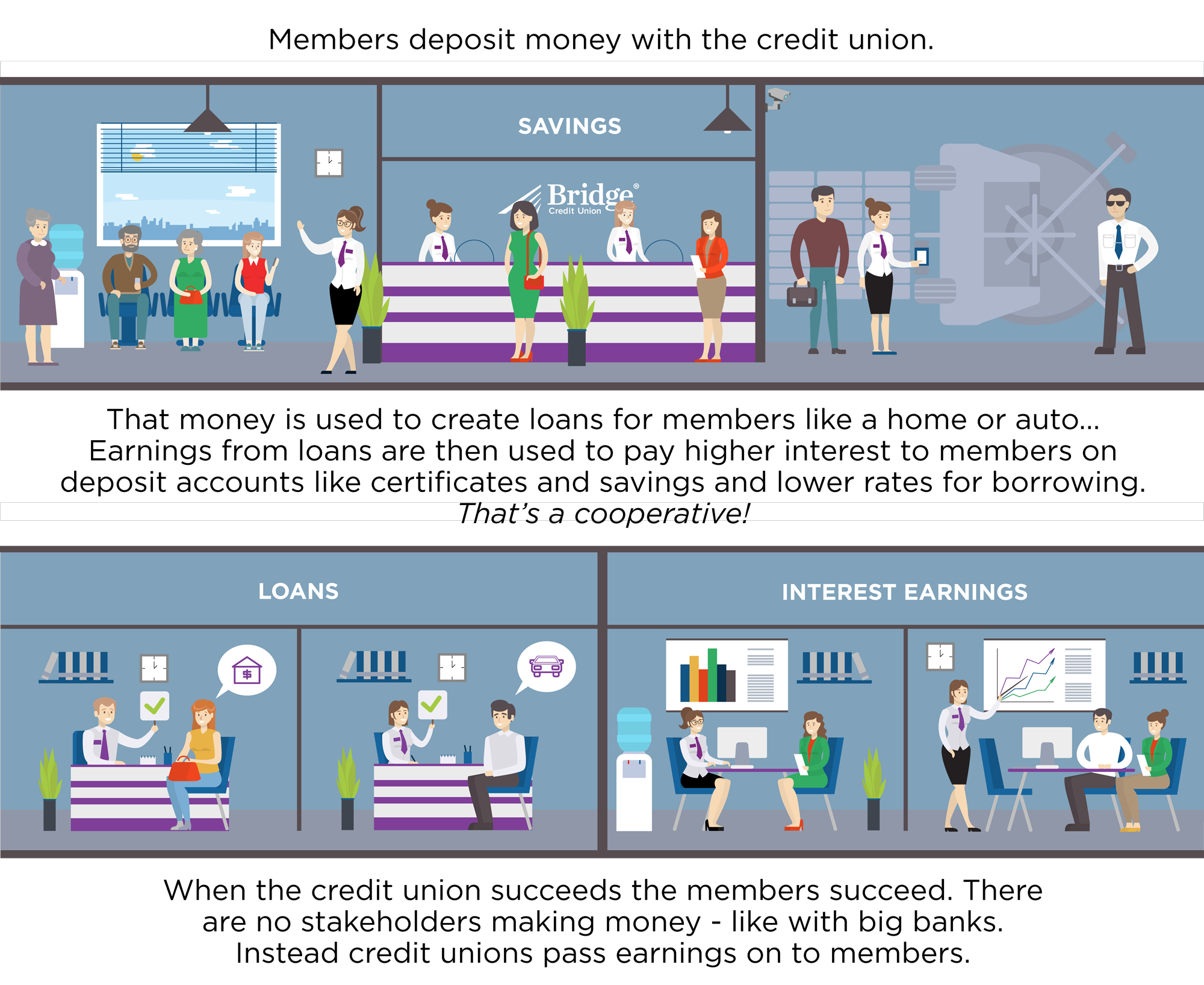
What is a credit union?
Credit unions sometimes offer deposit account rates that are above national averages — and some even offer highly competitive yields. Service is often more personalized, since credit unions commonly have close ties to the communities they serve. Credit unions are not-for-profit and distribute profits among their members
Credit Unions – A refreshing alternative to the large banking industry
Credit unions started in the 1900’s, but they became more popular in America in the 1920’s as a way for individuals and small business to get the credit and financing that they couldn’t get from traditional lending institutions. Credit unions were established in the United States, in part, to restore depositors’ confidence in their financial institutions. In the 1970’s, credit unions evolved when they were allowed to offer more services than before.
Credit unions today are thriving.
There are currently more than 102 million credit union account holders across the country. Credit unions have remained competitive by expanding their products and services beyond savings and loans.
What can credit unions offer?
Credit unions provide checking and savings accounts, loans, credit cards, direct deposit, electronic banking, financial education/counseling and the ability to establish and improve credit, all in a secure and friendly environment.
Credit unions are member-driven.
Unlike traditional banks, who work for a board of directors, a credit union reports to its members. This means in a credit union, depositors call the shots.
You can have confidence in the safety of your money.
Deposits into a credit union account are insured Through the National Credit Union Share Insurance Fund (NCUSIF) up to $250,000, so your money is just as secure in a credit union as it is in a traditional bank.
A credit union serves a community with a common bond.
This bond can be community-based, faith-based, industry-based, or organization based. Members share a common area of concern and financial similarities. These shared interests enable credit unions to provide the most relevant services to their members, and to tailor programs and packages to their specific needs. As a result, credit unions are known for providing higher quality service.
89% of members prefer credit unions over banks
Credit Unions are 2x more likely than banks to offer free checking
76% of credit unions offer free checking accounts to members
Sources: CUNA Member Activation Survey, CUNA Membership Benefits Report, Bankrate 2025 CU Checking Survey
For more information, visit mycreditunion.gov to learn more about credit unions and how they work.